
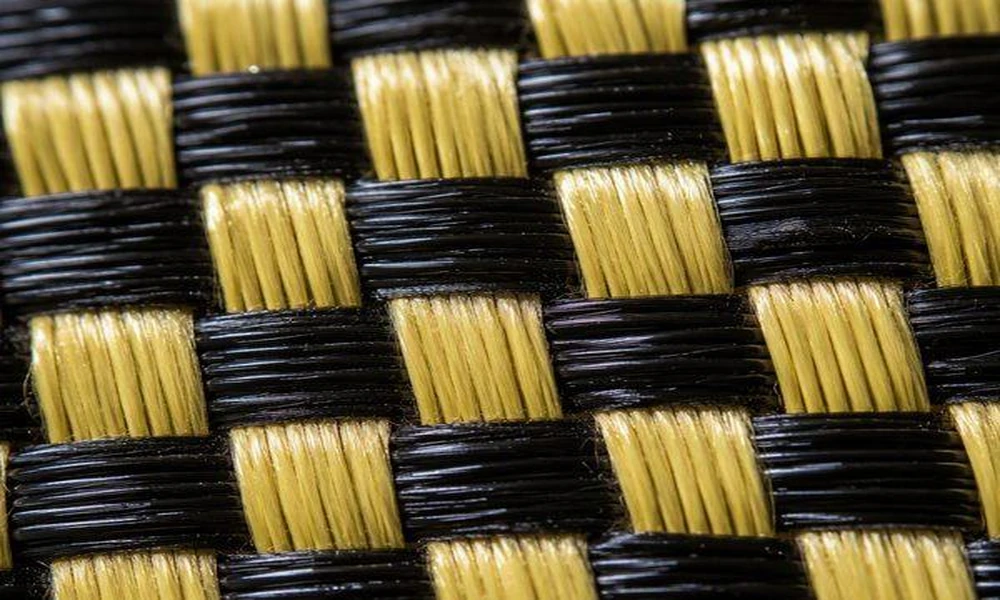
Carbon Kevlar fabric up close: structural material that happens to look expensive.
Some materials get chosen with a spreadsheet. The black-and-gold carbon Kevlar weave gets chosen across a parking lot. It catches light differently, it photographs like nothing else, and it tells anyone who knows what they are looking at that the owner thought about more than shine. But the interesting thing about this fabric is that the look is the engineering.
The Gold Threads Are Not Paint
Every golden thread in that weave is aramid fiber, the Kevlar family, doing real structural work. The black threads are carbon. Nothing is printed, dyed, or wrapped. The color you see is the material itself, which means it cannot peel, flake, or fade the way a finish can. What you see is quite literally what the part is made of.
That matters for a style decision, because it means the look is honest. The part is not pretending to be tough. It is tough, and the toughness is visible.
What It Signals on a Build
Gloss twill carbon says ‘lightweight and classic.’ Forged carbon says ‘supercar money.’ The black-and-gold hybrid says something rarer: this car gets driven. It is the weave of rally builds, time-attack splitters, and street cars that actually leave the garage. On the right car it reads as intent, not decoration.
It also plays well with color in a way plain carbon does not. The gold weave picks up warm tones, bronze wheels, tan interiors, desert-tan wraps, and cuts cleanly against dark paint. On a white or silver car it becomes the loudest detail on the body. Plan for that.
The Practical Case Underneath the Style
Because the gold is aramid, a hybrid part absorbs impact instead of cracking: aramid stretches two to four percent before breaking, roughly double carbon fiber’s figure. Splitters, bumper lips, and rocker panels in hybrid weave survive the kind of daily abuse that turns plain carbon into insurance claims. The carbon Kevlar vs carbon fiber data shows the size of that gap, and it is the reason the weave exists at all.
Two honest caveats. The aramid fibers are UV-sensitive, so a visible-weave hybrid part needs a quality clear coat with UV blockers. Buy from a maker who knows that, and the part will look good for years. And because aramid fibers cost more than carbon, hybrid parts carry a real premium. You are paying for both the look and the toughness; fortunately, you are getting both.
Where It Works Best
- Front lips, splitters, and bumper inserts. The highest-impact zone gets the toughest weave, and it is the first thing people see.
- Mirror caps and side blades. Small doses of gold read as detail, not costume.
- Interior trim on driver-focused builds. Especially with tan or cognac leather.
- Engine bay accents, where the heat stability of the composite and the color pop both help.
Where it works less well: roof wings and rear spoilers sit far from the impact zone and far from eye level, so the premium buys little there. For those, classic twill, or something from this carbon fiber color guide if you want a different accent, usually makes more sense.
Pairing the Weave With Paint
A few combinations work so reliably they are almost cheat codes. Black cars take the gold weave as a tone-on-tone detail that reads subtle until light hits it. White and silver cars turn the same weave into contrast. Striking, but commit to it in more than one place or the part looks orphaned. Earthy colors like sand, olive, and bronze are the natural partners; the aramid gold sits inside that palette like it was designed for it. Bright reds and blues are trickier: the gold competes with them, so keep hybrid accents small and low on the car. When in doubt, mirror the wheel finish. Builds rarely go wrong when the weave and the wheels agree with each other.
Photographing the Weave
A practical bonus for the build-thread crowd: the gold weave photographs beautifully if you light it right. Shoot it at golden hour or under warm shop lights and the aramid threads glow against the carbon. Shoot it at noon and the contrast flattens. Detailers who know composites will also tell you the weave hides light dust and water spotting better than gloss black carbon. A small mercy on a daily driver.
The Point
Most style choices on a car ask you to sacrifice something: durability, weight, money. The black-and-gold weave is the rare case where the bold choice is also the durable one. If your build lives where it can be hit, the toughest option on the table is also the best looking one. That does not happen often. Enjoy it when it does. Buy it once, bolt it on, and let the gold threads do their quiet work for the next decade.

Comments are closed.