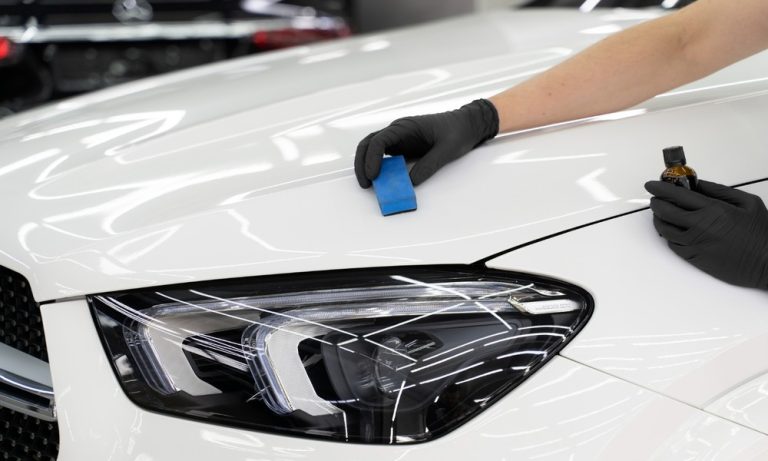

A coating package described as “for the car” may focus on painted bodywork while leaving glass, wheels, trim and interior materials outside the scope. Identify the surfaces included before deciding whether extras are worthwhile. The right package is the one whose treatment and purpose you understand, not necessarily the one with the largest collection of optional areas.
Walk around the materials rather than the body panels
Most owners describe a vehicle by its panels: bonnet, doors, roof and boot. A service discussion may need a different map. Painted metal, unpainted trim, glass and other materials sit beside one another but do not automatically belong in the same treatment. Ask the provider to identify exactly what its quoted coating service covers on the actual vehicle.
Look closely at areas where materials meet. A mirror assembly may include painted sections, trim and glass. A wheel has a visible face and less accessible areas that may be described differently in a quotation. You do not need to decide the application method yourself. You need to understand what the provider means when it names an area and what will remain untreated.
Existing modifications can make the discussion less straightforward. Tell the shop about wraps, protective film, replacement trim and earlier coatings. A generic description based on the factory model may not reflect the surfaces now present. The professional should assess compatibility and explain what can be offered. Avoid assuming that a product suitable for one material can be applied across everything that looks similar.
Be precise about the problem you hope to address. Perhaps wheel cleaning is the chore you dislike most, or the body paint is the only part of the car you want treated. Those priorities can lead to different decisions. A broad desire for easier maintenance is a useful beginning, but each additional surface should connect to a task you actually care about.
The distinction also helps you interpret the result at collection. If you expected the exterior glass to be treated but the agreed package covered paint, disappointment can arise even when the provider completed the work accurately. Clear surface boundaries make the service easier to review. They also make future questions easier to direct to the right product and part of the vehicle.
Optional areas should earn their place
You can review the coating package details published by SRS Tints for Mississauga and Vaughan to see how a service menu separates optional areas. Its page lists categories including wheels and calipers, glass, plastic and trim, and upholstery. Confirm the current scope and suitability directly rather than treating the presence of an option as proof that every vehicle needs it.
Ask what changes in the proposed work when an option is added. The answer should identify the relevant product or treatment, any necessary preparation and the surfaces included. An add-on name alone is not enough to compare value. If the provider cannot assess an area without seeing the vehicle, arrange that assessment instead of expecting a reliable answer from a brief description.
Consider how the optional area fits your maintenance routine. A treatment might be attractive in principle but have little importance to an owner who already finds that part easy to maintain. Another owner may care about the same area because it consistently makes cleaning inconvenient. There is no universal requirement to buy the full set. The useful comparison is between the task you want improved and the service being offered.
Do not let the ease of adding an option replace a decision about budget. A sequence of modest additions can change the overall purchase substantially. Ask for an itemised quotation and consider the complete cost before authorising the work. If you choose to leave an area untreated, have that omission understood rather than feeling obliged to justify it as a technical judgement.
Timing can influence the choice too. If a component will soon be replaced or repaired, discuss whether treating it now is sensible. Share the known plans with the provider and let the relevant professionals coordinate where necessary. There is little benefit in making a cosmetic decision without mentioning work that could change the same surface shortly afterwards.
Different surfaces can need different care
Obtain care instructions that identify the treatments actually applied. A single vague reminder to wash gently may not answer every question about several materials and products. Ask how the provider recommends maintaining each treated category and what should prompt a call for advice. The instructions should be usable by whoever normally looks after the car.
Keep product identification alongside the surface map. If another detailer works on the car later, they should not have to infer the coating from its appearance. Explain which areas were treated and provide the relevant guidance. This is especially useful when the body, wheels and interior did not all receive the same service or were completed at different times.
When a concern appears, describe its location accurately. A change on a trim piece and a mark on the paint may call for different assessments. Avoid applying an unfamiliar corrective product across several surfaces in the hope that one approach will solve everything. Contact the provider with the observations and let the next step follow the specific material and treatment involved.
At collection, take a final walk around the car with the agreed scope in mind. Confirm the optional areas that were included, the ones left out and the documents supplied for future care. This does not need to become a complicated inventory. A clear explanation of the work is enough to prevent the phrase “coated car” from implying more than was actually purchased.
A package covering fewer surfaces can still be the right choice when those surfaces are the ones you value. Knowing that the paint was treated and the glass was not is more useful than vaguely believing the entire vehicle received the same protection. Specificity makes the purchase easier to own.